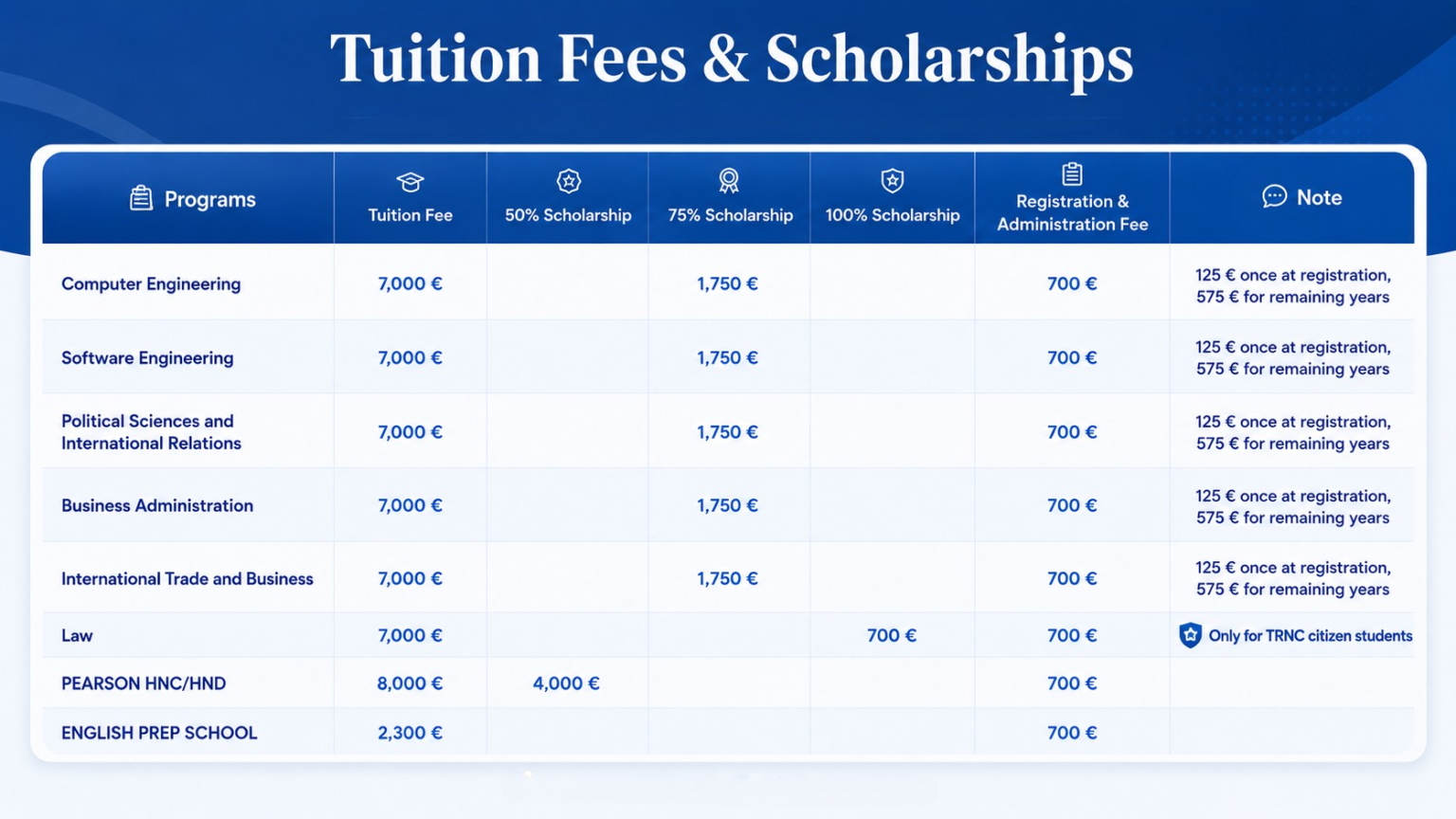





Political Science and International Relations
Education goes beyond textbooks and classrooms. We believe in empowering students to explore their passions challenge conventions.
The Department of Political Science and International Relations at International University of Alasia offers a dynamic and interdisciplinary education designed to help students understand the political, economic, and social forces shaping today’s world. Combining the study of political theory, comparative politics, international law, diplomacy, foreign policy, and global governance, the program equips students with the analytical and critical thinking skills needed to interpret complex international developments and contribute to informed decision-making in both public and private sectors.
Through a curriculum enriched with research projects, case studies, simulations, and interactive learning experiences, students develop practical competencies alongside strong academic foundations. Graduates are prepared for careers in diplomacy, international organizations, government institutions, public administration, journalism, policy analysis, non-governmental organizations, and multinational companies, while also gaining the knowledge and research skills required for postgraduate study and academic careers in political science and international relations.
Program Highlight
Faculty
Business and Economics
Duration
4 Years
Language
English
Bachelor of Political Sciences and International Relations
Typical Program Structure
- Duration: 4 Years - 8 Semester (Full-Time)
- Total Credits: 240 ECTS
- Total Courses: 46
- Compulsory Courses:34
- University Elective Courses: 3
- Faculty Elective Courses: 4
- Departmental Elective Courses: 5
Core Curriculum Topics
History of Civilization
- Examines the development of major civilizations, their institutions, cultures, and contributions to world history.
History of Political Thought
- Explores the evolution of political ideas and the works of influential political thinkers from antiquity to the modern era.
Political History
- Analyzes key political events, institutions, and transformations that have shaped states and societies.
Politics
- Introduces the concepts, structures, and processes of political systems at the national and international levels.
Political Theory
- Examines the fundamental concepts, principles, and normative debates underlying political life and governance.
International Relations Theory
International Law
- Explores major theoretical approaches for understanding cooperation, conflict, and interactions among states and global actors.
- Introduces the principles, sources, and institutions of international law governing relations between states and international organizations.
Curriculum Overview
The Political Science and International Relations curriculum is designed to provide students with a comprehensive understanding of political systems, governance, international affairs, and global challenges. The program combines theoretical foundations with practical analysis, enabling students to examine political institutions, public policies, diplomatic relations, international law, and contemporary global issues from both national and international perspectives. Through an interdisciplinary approach, students develop critical thinking, analytical reasoning, research, and communication skills that prepare them for careers in government, international organizations, diplomacy, policy analysis, academia, and the private sector.
Students begin with core courses that establish a strong foundation in political science, history, economics, law, and international relations. In the later stages of the program, they explore specialized areas such as comparative politics, political theory, international relations, diplomacy, international law, foreign policy, and global governance while strengthening their analytical, research, and communication skills.
Curriculum Breakdown Summary
The curriculum is structured to provide a progressive and intellectually rigorous learning experience through four integrated components:
Core Courses – Establish a solid foundation in political science, international relations, history, law, and research methods.
Major Requirements – Develop advanced knowledge in political theory, comparative politics, diplomacy, international organizations, foreign policy, international security, and global governance.
Electives – Allow students to explore specialized areas such as human rights, European studies, conflict resolution, public administration, regional politics, political communication, and contemporary global issues.
Experiential Learning – Encourages the practical application of political and international relations concepts through case discussions, policy analysis, research assignments, and academic presentations.
| Semester | Course Code | Course Title | Total Credit | Prerequest | ECTS |
1 | ENL101 | ENGLISH SKILLS I | 3 | – | 4 |
| HIS101 | HISTORY I * | 0 | – | 2 | |
| TUR101 | TURKISH LANGUAGE I* | 0 | – | 2 | |
| COM151 | INTRODUCTION TO COMPUTER I | 3 | – | 4 | |
| LAW101 | INTRODUCTION TO LAW | 3 | – | 5 | |
| POL101 | HISTORY OF CIVILIZATION I | 3 | – | 5 | |
| ECON101 | INTRODUCTION TO ECONOMICS I | 3 | – | 5 | |
| MAT151 | MATHEMATICS I | 3 | – | 5 | |
| 18 | 30 | ||||
2 | ENL102 | ENGLISH SKILLS II | 3 | ENL101 | 4 |
| HIS102 | HISTORY II * | 0 | HIS101 | 2 | |
| TUR102 | TURKISH LANGUAGE II* | 0 | TUR101 | 2 | |
| COM152 | INTRODUCTION TO COMPUTER I | 3 | COM151 | 4 | |
| MAT152 | MATHEMATICS II | 3 | MAT151 | 5 | |
| ECON102 | INTRODUCTION TO ECONOMICS II | 3 | ECON101 | 5 | |
| POL102 | HISTORY OF CIVILIZATION II | 3 | POL101 | 5 | |
| POL104 | SOCIOLOGY | 3 | – | 5 | |
| 18 | 30 | ||||
3 | LAW201 | CONSTITUTIONAL LAW | 3 | LAW101 | 5 |
| BUS221 | STATISTICS | 3 | – | 5 | |
| POL203 | HISTORY OF POLITICAL THOUGHT I | 3 | POL102 | 7 | |
| POL201 | INTRODUCTION TO POLITICS I | 3 | – | 7 | |
| POL205 | POLITICAL HISTORY I (1648-1945) | 3 | 6 | ||
| 15 | 30 | ||||
4 | POL204 | HISTORY OF POLITICAL THOUGHT II | 3 | POL203 | 7 |
| POL202 | INTRODUCTION TO POLITICS II | 3 | POL201 | 7 | |
| POL206 | POLITICAL HISTORY II (1945-1990) | 3 | POL205 | 6 | |
| UNIVERSITY ELECTIVE I | 3 | – | 4 | ||
| DEPARTMENTAL ELECTIVE I | 3 | – | 6 | ||
| 15 | 30 | ||||
5 | LAW301 | INTERNATIONAL LAW I | 3 | 8 | |
| POL301 | POLITICAL THEORY | 3 | POL202 | 7 | |
| FACULTY ELECTIVE I | 3 | 5 | |||
| UNIVERSITY ELECTIVE II | 3 | – | 4 | ||
| DEPARTMENT ELECTIVE II | 3 | – | 6 | ||
| 15 | 30 | ||||
6 | LAW302 | INTERNATIONAL LAW II | 3 | LAW301 | 8 |
| POL302 | INTERNATIONAL RELATIONS THEORY | 3 | POL202 | 6 | |
| POL304 | POST-COLD WAR WORLD | 3 | POL206 | 5 | |
| FACULTY ELECTIVE II | 3 | – | 5 | ||
| DEPARTMENTAL ELECTIVE III | 3 | – | 6 | ||
| 15 | 30 | ||||
7 | POL401 | COMPERATIVE GOVERNMENT SYSTEMS | 3 | POL301 | 7 |
| POL403 | ETHNICITY, IDENTITY AND NATIONALISM | 3 | 6 | ||
| POL405 | POLITICAL IDEOLOGIES | 3 | POL301 | 6 | |
| FACULTY ELECTIVE III | 3 | 5 | |||
| DEPARTMENTAL ELECTIVE IV | 3 | – | 6 | ||
| 15 | 30 | ||||
8 | POL402 | CURRENT INTERNATIONAL ISSUES | 3 | POL304 | 7 |
| BUS406 | RESEARCH METHODS | 3 | – | 7 | |
| FACULTY ELECTIVE IV | 3 | – | 6 | ||
| UNIVERSITY ELECTIVE III | 3 | – | 4 | ||
| DEPARTMENTAL ELECTIVE V | 3 | – | 6 | ||
| 15 | 30 | ||||
Prof. Dr. Ali Poyraz Gürson
Doç. Dr. Ersoy Önder
Doç. Dr. Mehmet Sadık Akyar
Yrd. Doç. Dr. Gürkan Pamukçu